Orakel der Gesundheit
The project focused on designing a slow aging oracle card set that communicates health practices in an accessible way. Mythological motifs were used to create engaging and memorable visual cues that encourage motivation.
Visual Storytelling
Editorial Design
Role
Concept Development, Visual Design & Illustration
Timeline
6 Months
team
Solo
platform
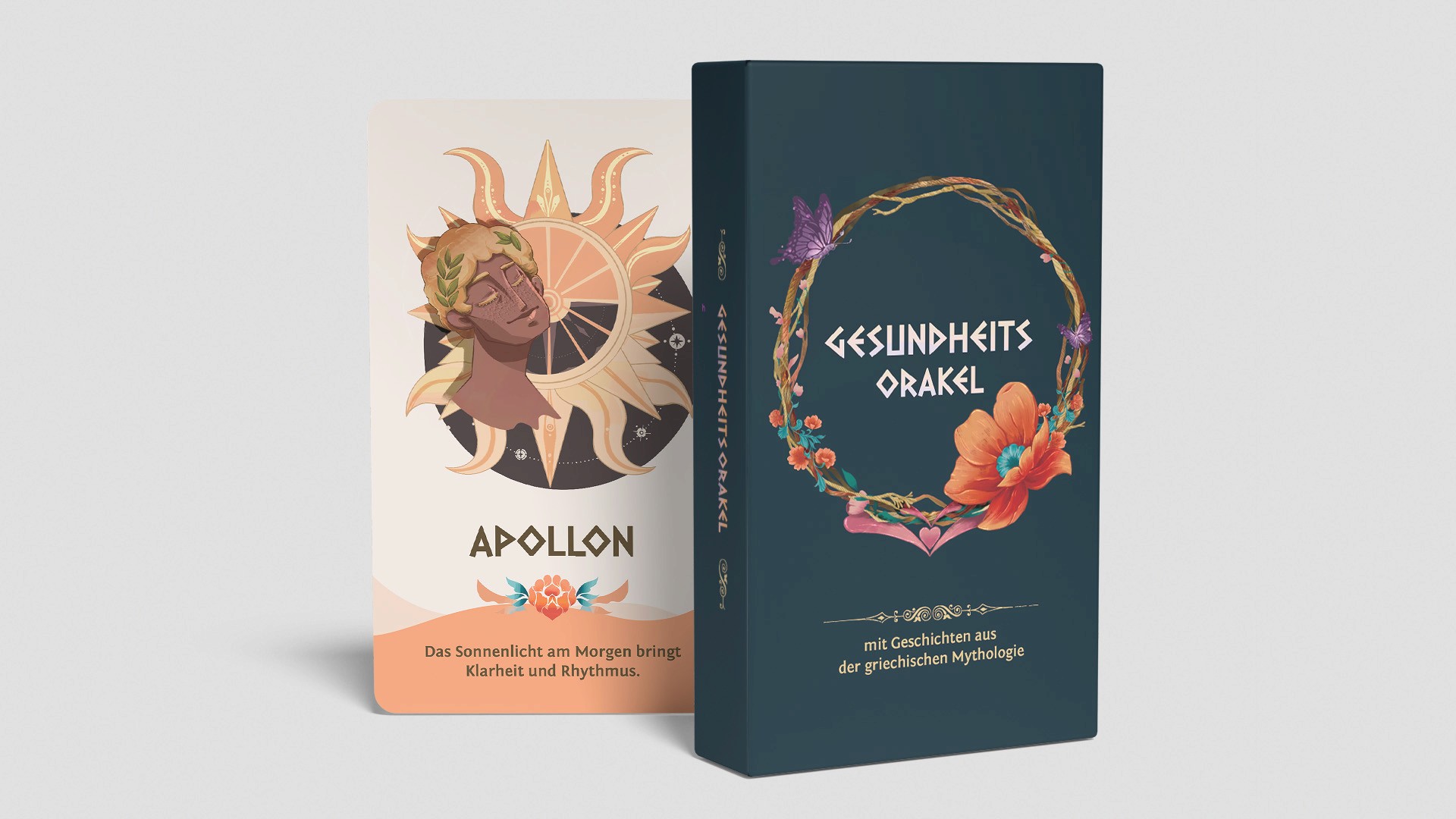
Concept
Social media platforms such as TikTok, Reels, and Shorts are filled with fast-paced health tips that can feel overwhelming and rarely lead to real, lasting change. How often are these tips actually put into practice? And how can sustainable habits be developed in environments dominated by short-lived content?
This project responds to that question by shifting the focus from quick information to slow aging—encouraging sustainable and consistent habits. The goal is to create a simple and approachable system that motivates people in a playful way to take small steps in their daily lives and gradually build long-term routines.
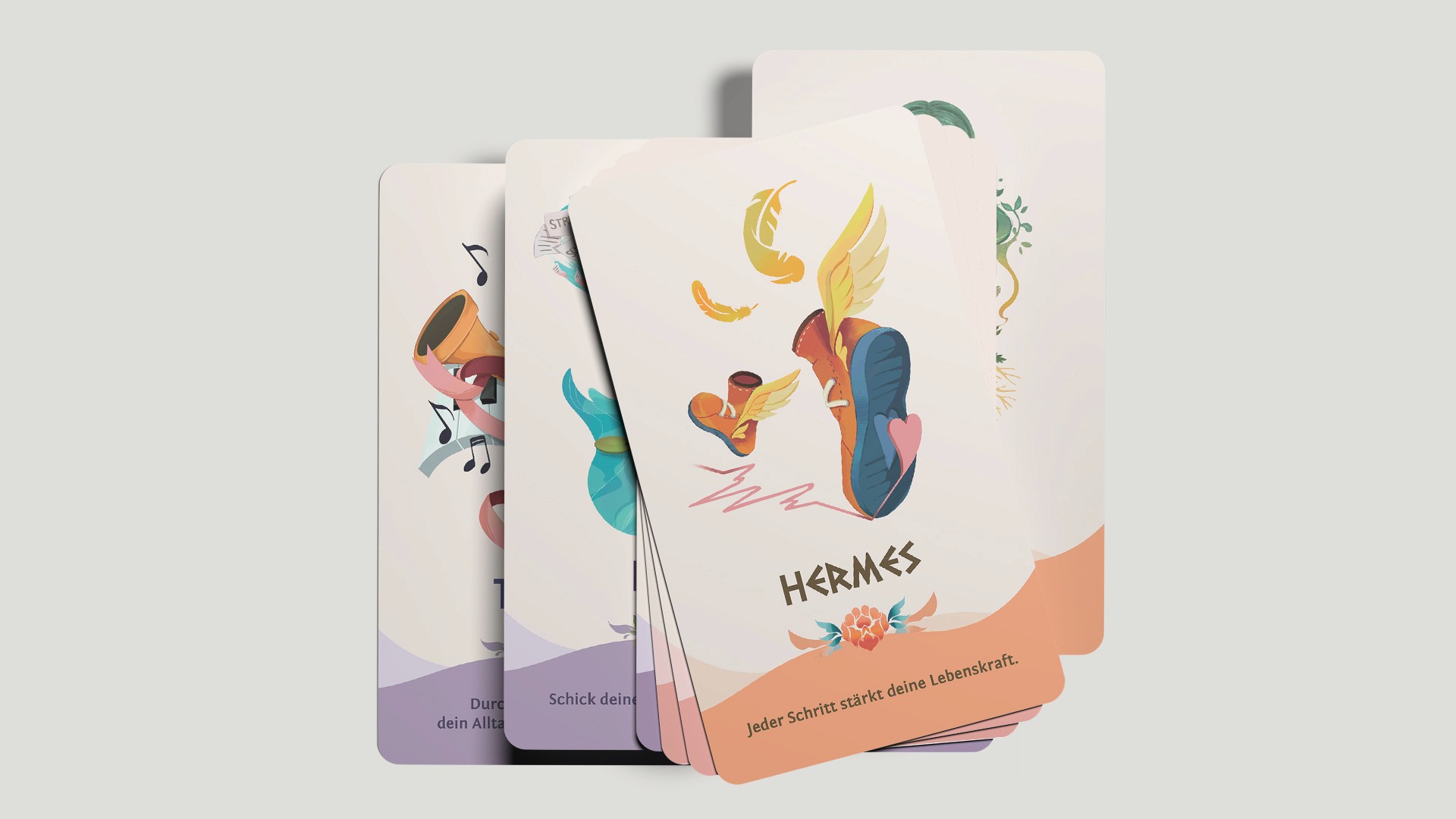
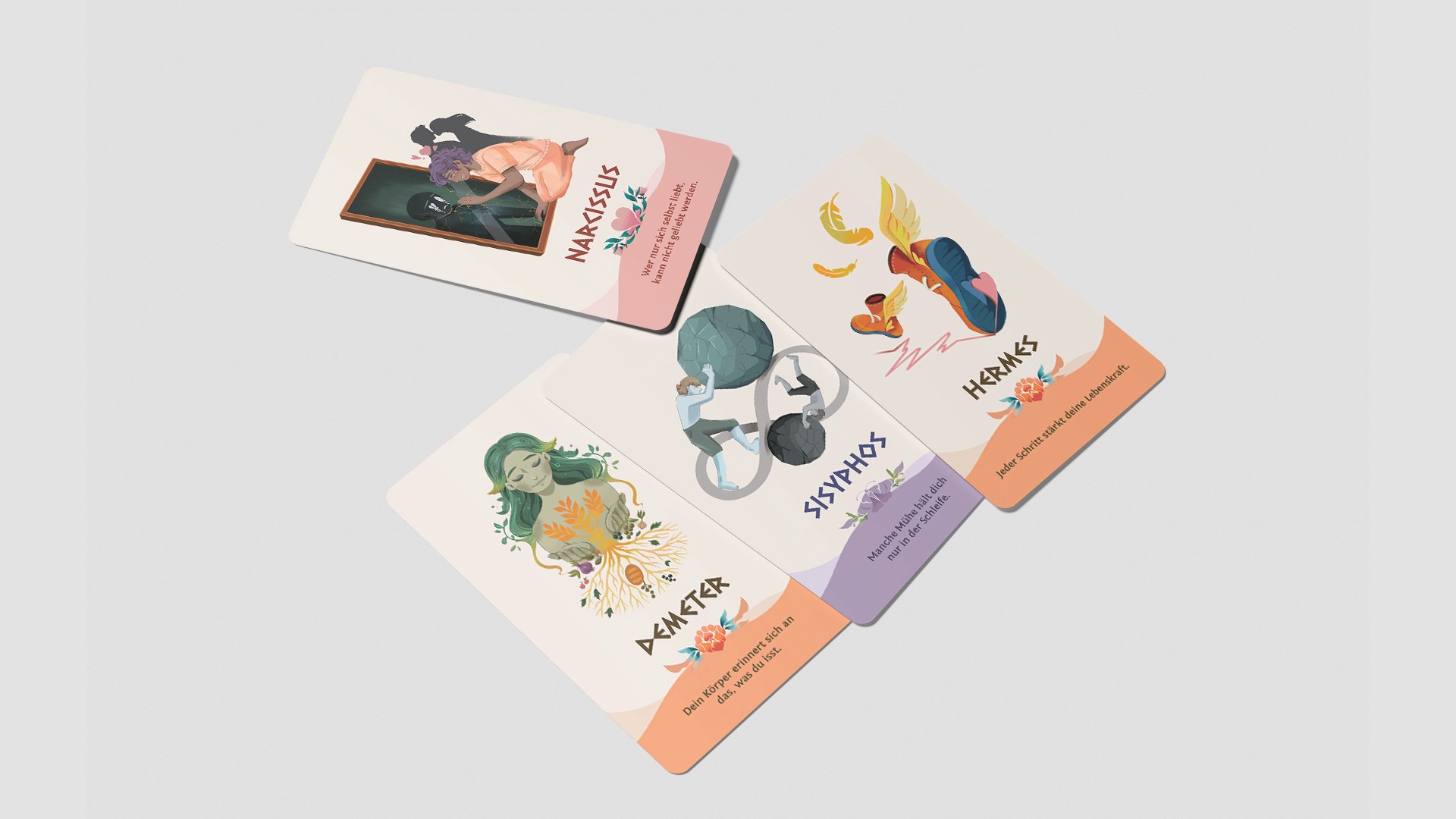
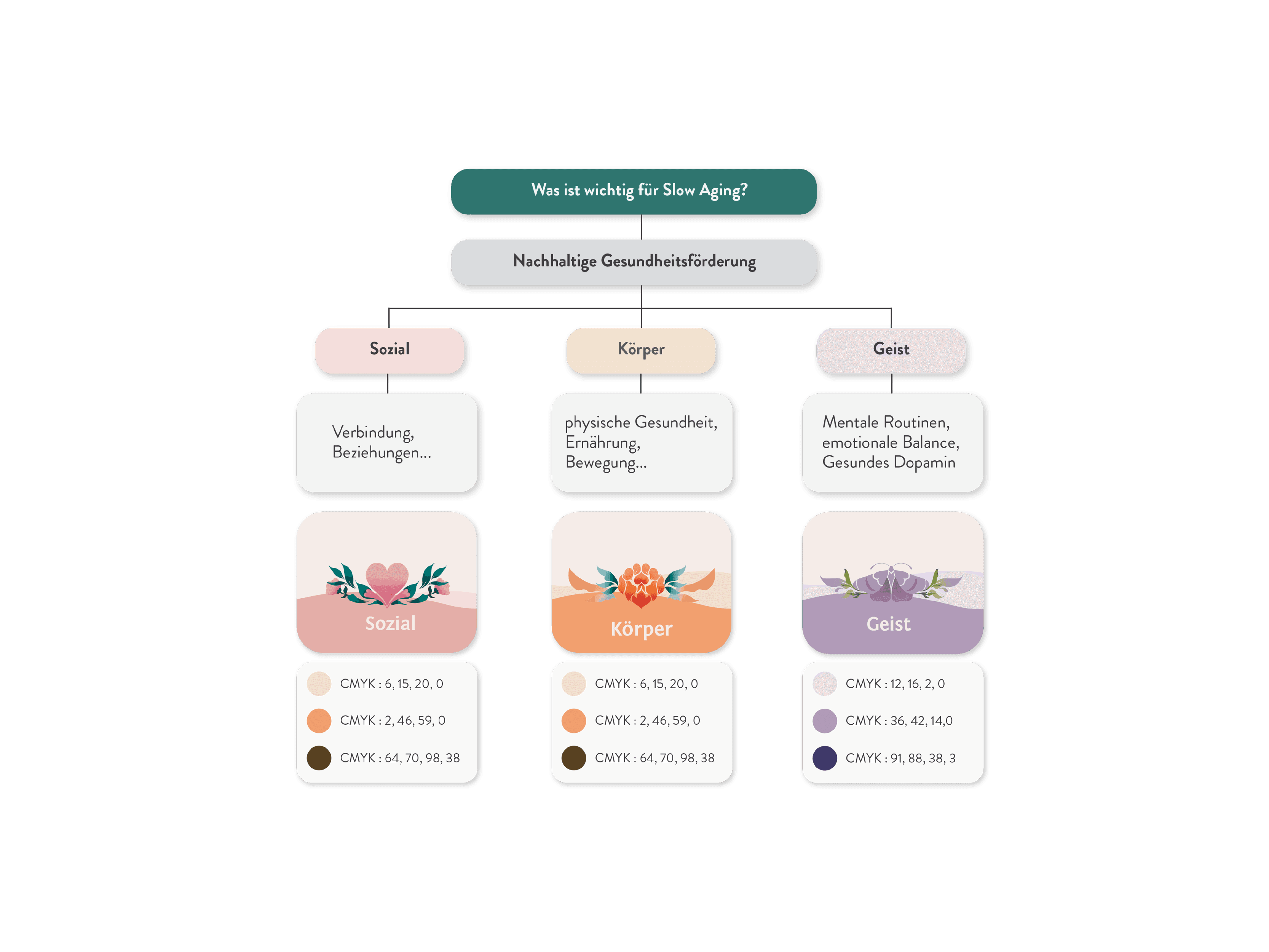
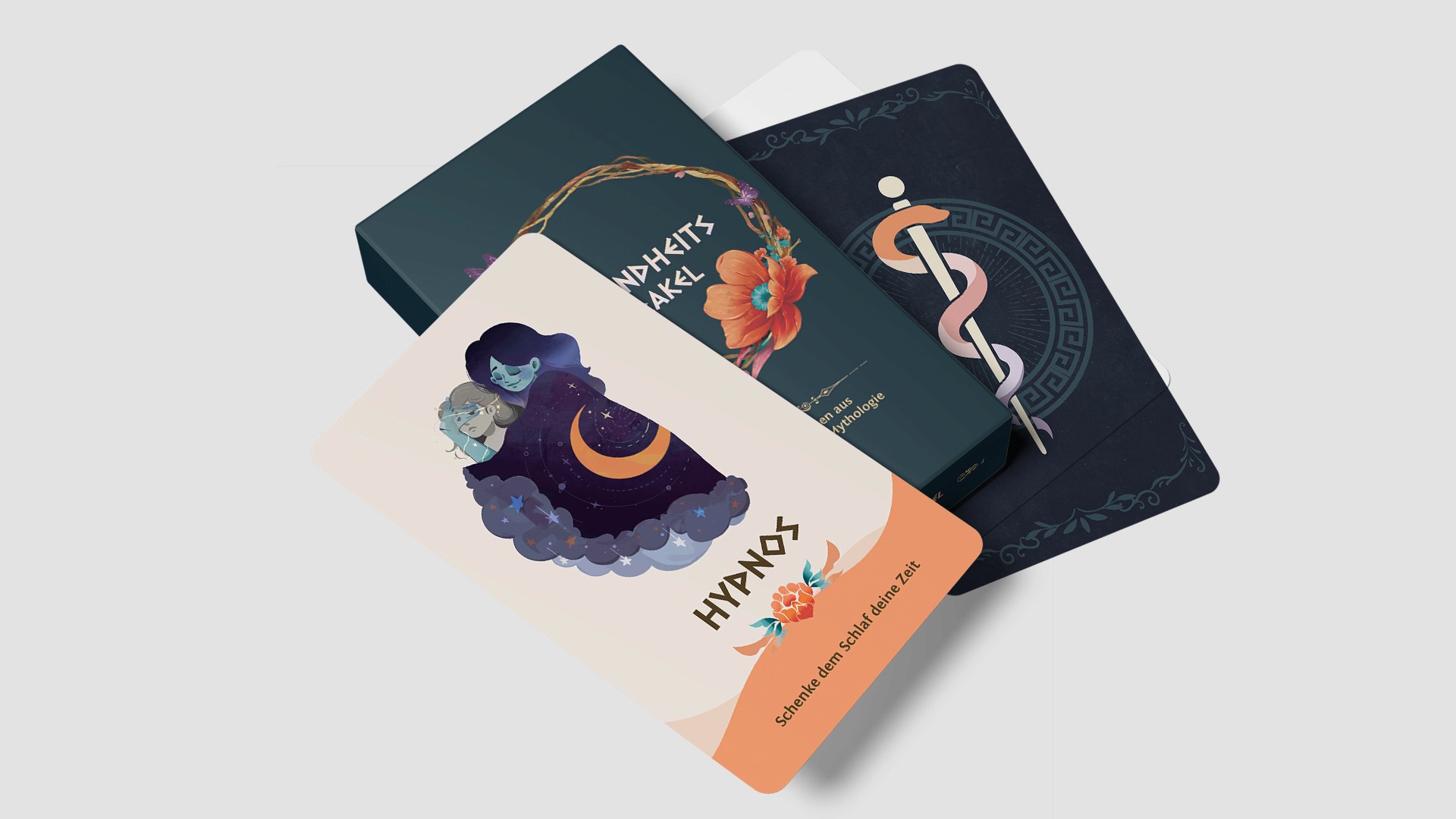
Colors and symbols are used to clearly categorize the cards, while a continuous wave form visually connects the elements into a cohesive system.
The central element of the oracle cards is the illustration. Each card depicts mythological narratives or characteristic traits of the figures, closely connected to the message it conveys.
Bold and high-contrast colors were chosen to create an immediate visual impact. The layout is intentionally minimal, allowing the imagery and message to remain the focus.
While the project was initially conceived in a traditional tarot format, oracle cards include both a title and a message. Therefore, a slightly larger format was chosen to provide enough space for both text and image.
The cards are organized into three symbolic categories, each representing different aspects of health.
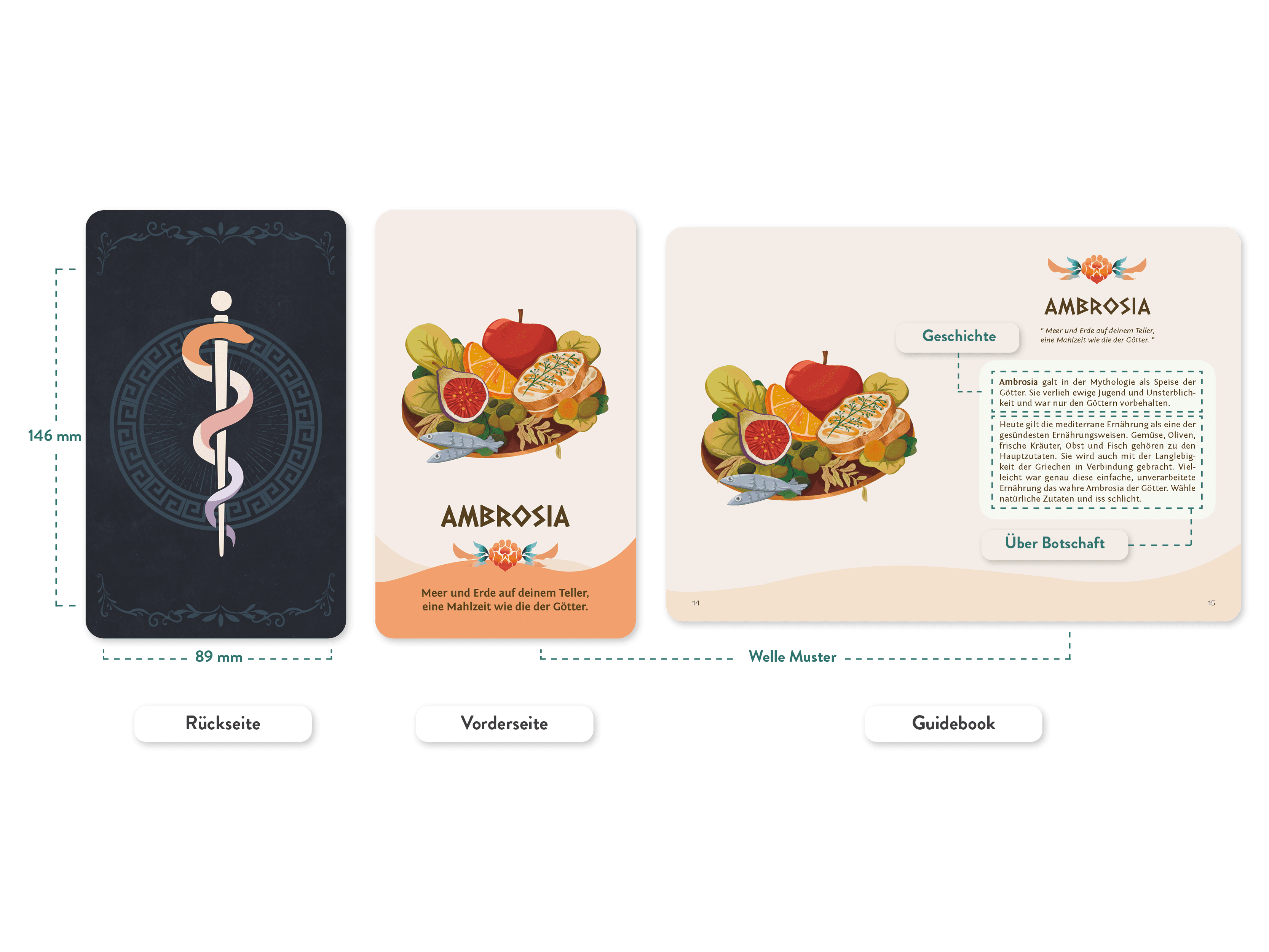
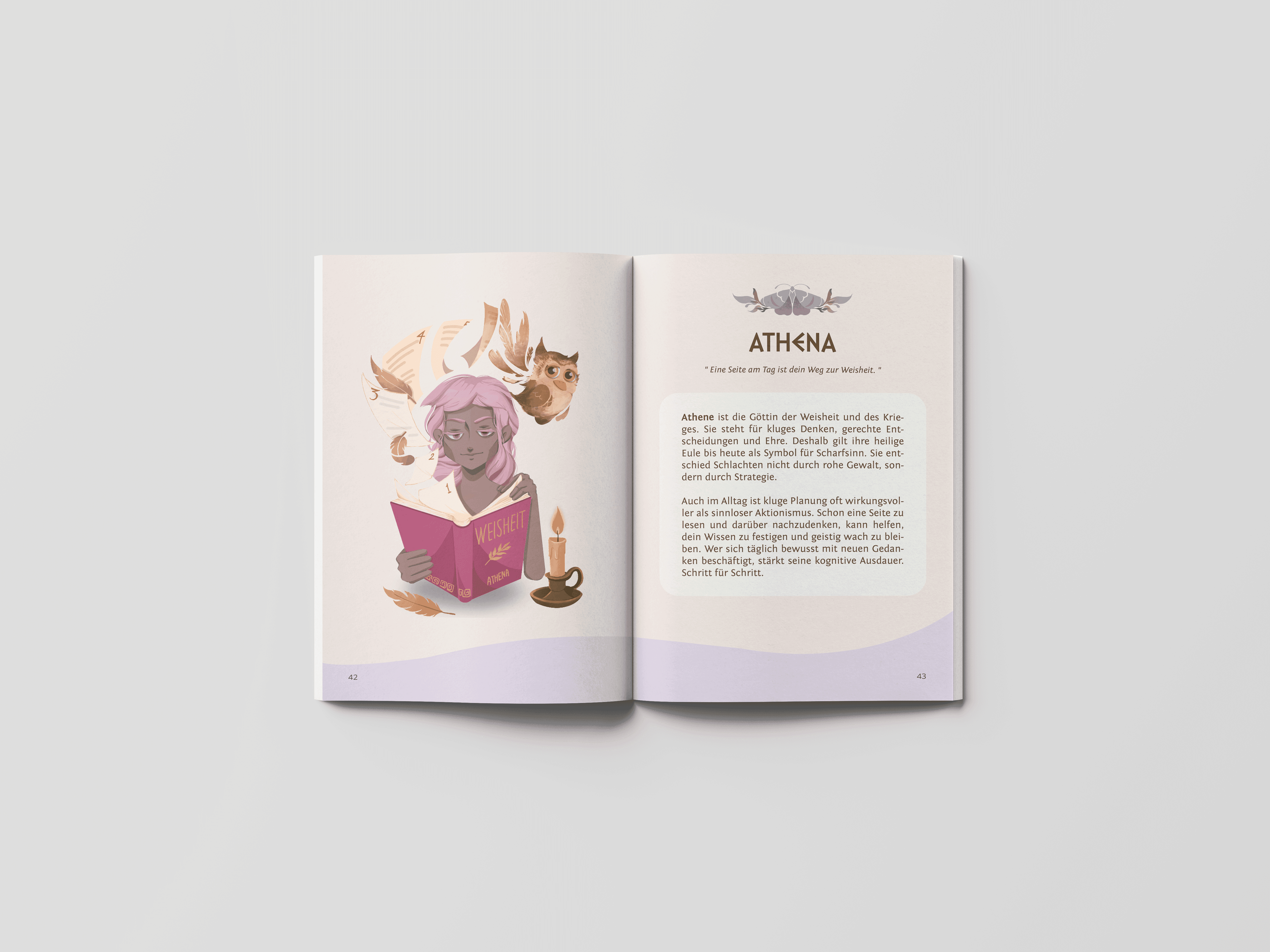
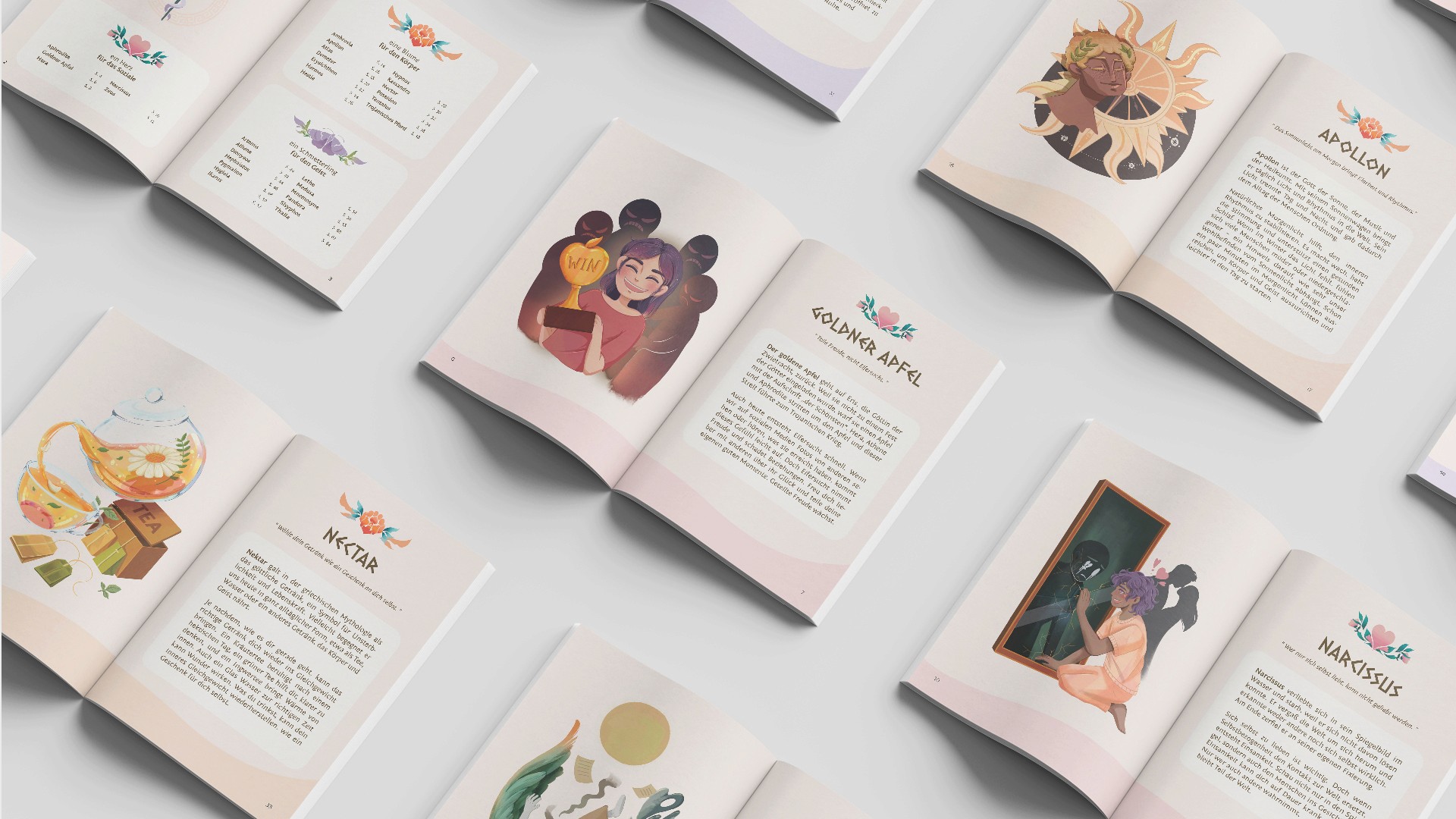
The oracle set includes a guidebook with short stories based on the mythological motifs, along with explanations connected to each card’s message.
To maintain a cohesive visual language, the same graphic element is consistently used throughout the layout. The guidebook consists of 66 pages.
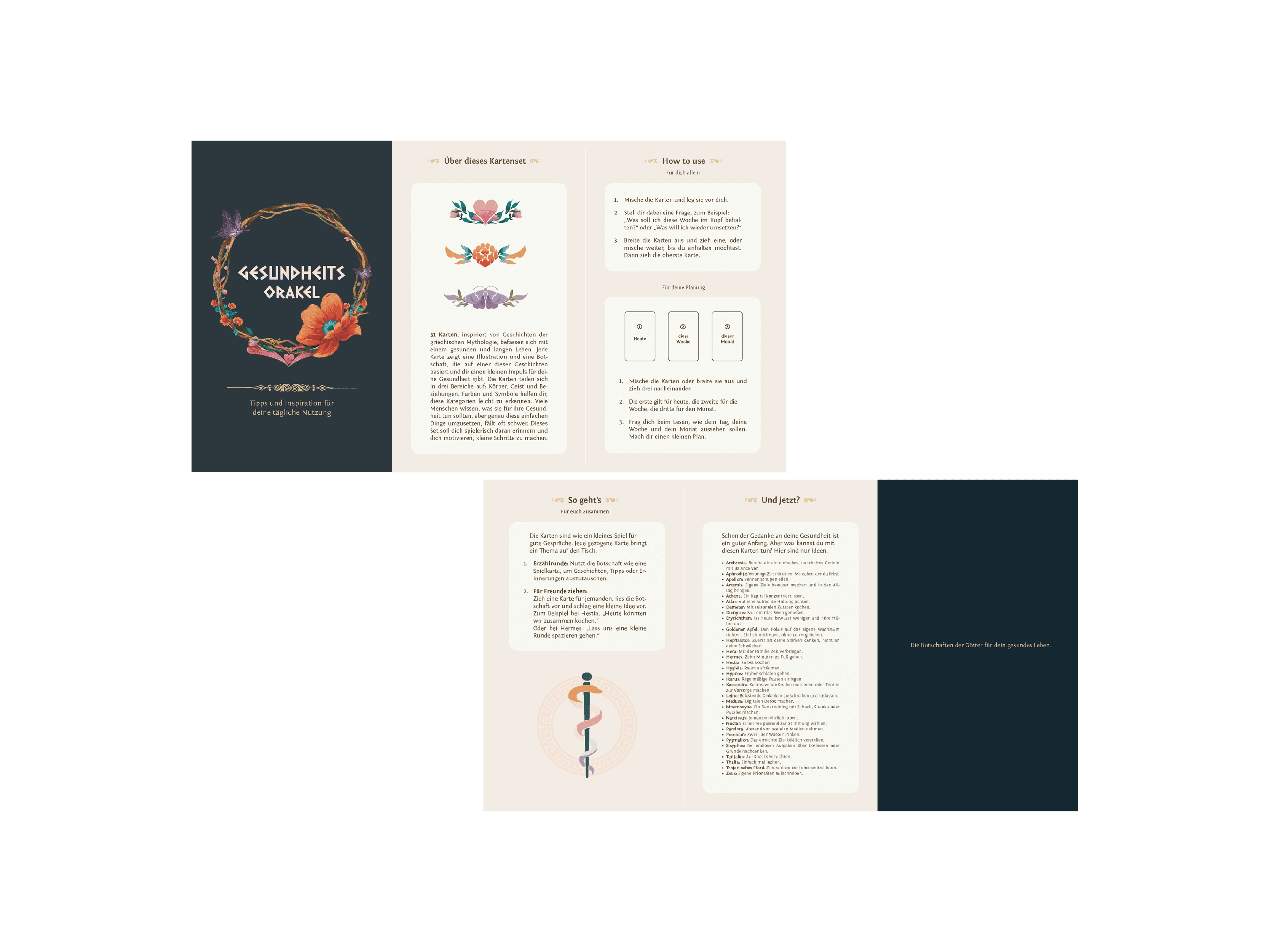
In addition to the guidebook, the set includes a six-panel fold-out insert with short suggestions on how to use the cards. While the usage is entirely open, the insert offers gentle guidance for first-time users, such as how to draw a card or whether to begin with a specific question.